Sunday, July 12, 2015

Lesson 6 - Lecture


In this video Professor Peck introduces the minimalist and pop artists. One that is so relevant to us, even today, is artist Andy Warhol whose avant garde abstraction paintings of Marilyn Monroe and the Campbell's soup cans are  well known throughout the United States. The video discusses a few other artists during this art era, as well as other avant garde moves from these artists. 


One avant garde move that I found very interesting was the extreme abstraction. During this time every artist was doing it because they were reacting and going against the abstractions and other art work shows in museum and galleries at the time. What the artists chose do instead was to take an abstraction and fill it with objects, recognizable objects to be exact but it was considered extremely avant garde because it was going against art during that specific era and by that I mean that you did not find any type of advertising in galleries or museums and that is exactly what some of these artists were doing.

"You don't walk into a gallery and see advertising. You don't walk into an art gallery and see an American flag. In fact that is the last place you would expect to see an American flag at this particular time. If everyone is loving being an American post WWII then a lot of the avant garde artists are not going to be into that. Unless you're extremely avant garde." The person who I feel completely fits the description of extremely avant garde is Andy Warhol, especially in his recreation of the Brillo box. He is completely stepping away from the canvas altogether and recreating art in the form of shapes and using the objects surrounding it as well. This is why I found Warhol to be the most interesting artist talked about in this video because he completely redefined avant garde art from two-dimensional to three-dimensional.

What I liked a lot in this video was the timeline given of all the different art movements. It was interesting to see how many things in the art world had changed and how often it did. I also like that we are now in a more modern topic of artists.


Monday, July 6, 2015

Lesson 5 - Smithsonian - Pollock

He was the first American to capture the popular imagination. A "cowboy" from Wyoming, Jackson Pollock was always controversial and the pressures of his new-found celebrity compounded his life long struggle with alcoholism, a fight he lost when he died in a car crash at the age of 44.

"New needs need new techniques and modern artists have found new ways and new means of making a statement. It seems to me that the modern painter cannot express this age, the airplane, the atom bomb, and the radio in the old forms of the Renaissance or any other past culture. Each age finds its own technique." For Pollock that technique was abstract expressionism and he performed this through his famous drip paintings. He has earned both notoriety and abuse for his work and people have even gone as far to question whether or not it would be too hard to paint like that themselves so that they could be known as an artist as well. I find this interesting because like in the lecture video, it states that art is the finely tuned sense of craftsmanship that is celebrating a humans ability to render reality or fantasies. Anything can be art, Pollock proves that along with many others in the world. Yet what I find the most interesting is that it seems he is the only one, that I know of anyways, to be so publicly contradicted in the art world. He is ether the greatest painter in history or a kindergartner could perfect his paintings.

What I liked about this video is that they actually have Pollock narrating for part of it. I liked this because you are listening to the thoughts directly from the artist themselves rather than through the researched presentation of a narrator. You actually get the sense of what their emotion is when their talking and the actual facts. With a narrator there's always a posed question that they strive to answer through the video through their research, but only the artist can really answer that question. Granted it's hard when studying an artist like Michelangelo who's been dead for the last few centuries, but I think you get the point.

Who I found interesting was not just Pollock, but also the people interviewed that knew him personally. This adds a special affect to a biographical documentary because you're not just hearing from the Pollock himself, you're also hearing from the people who surround Pollock's life and knew him more than any other person. Rather than just listen to any other opinion from a critic about an artist, who listen to the opinion of someone who actually matters to the artist and without bias tell you how Pollock really was as a person.

Lesson 5 - Dali - Dali

With Orson Welles narrating, this documentary was a detailed account of Salvador Dali's emergence as an artist in the 1920's and his important contribution to surrealism in the 1930's all the way up until the present day of the film in the 1960's. It was filmed at his home in the seaside village of Port Lligat, just outside of CadaquƩs, Spain which Welles narrates to be the source of his inspiration.

Salvador Dali 
To me, just from this video, Dali seemed to be the ultimate avant-garde of avant-gardes. He lived up to every sense of the term. "Dali painted things that were behind things...double image, guessing game image, multiple image, visual puns."(Welles). But I like that because he chose to be himself, he chose to be his own type of artist, and he accentuated his weirdness so much that it almost seemed normal.

However, I didn't care so much for the film. I am not a huge fan of documentaries as it is and the fact that this one was filmed in the 60's and had poor quality didn't help either. I also couldn't understand what was being said all that well, especially when Dali was speaking, which made it hard to pay attention to what was being shown.

I did some extra research on Dali and he states something in his autobiography that I found very interesting because it almost explains his personality in a way. "All my eccentricities I habitually perpetrate, are the tragic constant of my life. I want to prove I am not the dead brother but the living brother. By killing my brother I immortalize myself." Dali's older brother died during infancy and by fighting the memory of him, he felt the need to be a show-off, not for the money but for himself. Which is completely misunderstood by other Surrealists during the time because they saw him as a "grubby money grabber" rather than looking at him for his talents.

Sunday, July 5, 2015

Lesson 5 - Scorsese Picasso Braque

This was a documentary produced by Arne Glimcher, with discussions from Martin Scorsese and various other artists and film producers. It was a cinematic tour through the effects of technological revolution and it tried to show how cubism, founded by Pablo Picasso and Georges Braque in 1907, supposedly translated the movies' revolutionary portrayal of time, space, and motion in fine art.

Pablo Picasso 
One of the things Scorsese says in this film was "Cubism was not a style. It was a revolution that instigated a profoundly radical change of form - in fact a radical change of vision itself." I found this interesting because the film itself seems to have been based around the assumption that changing technology drives artistic innovation. For instance, Picasso and Braque had a similar passionate interest in new technology and their art was based on the next big thing technologically speaking. They were fascinated by aviation and cinema and formed their own film club because of it. They were enthusiasts of technology and it was becoming because they were part of the generation that experienced this at the start.

What I liked about this documentary was that it wasn't just about art. It was taken out of the spotlight and combined with the effects of technology and film making, which is still art but in the new technological form and an incorporated element of popular culture.

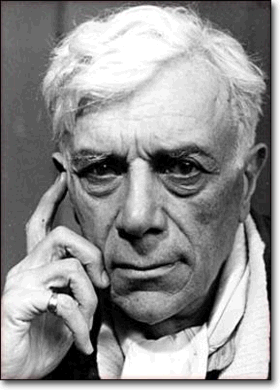
Georges Braque 

What I found to be the most interesting there was an avant garde-esqueness to this film. Glimcher makes the case that the appeal of film has always been in its ability to heighten reality rather than accurately depict it. The film demonstrates how early cinema succeeded by defying audience expectation of the real. Though cinema is the most effective means available to show reality in its purest form, it's also a paradox because it resists the natural tendencies that drives the artists towards further abstraction of their own work which is what Glimcher claims in his case. He reasons that cinema's aim is to bend and twist reality in order to convey abstraction.

Lesson 5 - Lecture

What is art? You're asked a question like this and what answer immediately pops into your mind? My my mind automatically just focuses in on painting but clearly that's not it because it is way to narrow minded of an answer. As Professor Peck states in the video, Art is the finely tuned sense of craftsmanship which celebrates a humans ability to render reality or fantasies. Now I found this interesting because it's obviously true. Anyone can deem something as art in any shape or form and there will always be someone who agrees that it's art and someone who doesn't. That's why we call them art critics.


Soon following this question, we learn from the video about the artist Marcel Duchamp, whom I found to be very interesting, and here's why this question correlates so well with him. He brought to the art world the new form of art called conceptual art - art that inspires the mind. The painting that pretty much defines conceptual art is the "Fountain", a urinal placed on its side. This was also part of the cubism technique that Duchamp skilled in the most. With cubism you bring in a fourth dimension, a different angle of the same object. And Duchamp did just that with the "Fountain"(Shown on the left). He gave a different conception of an object that at every angle you can tell it's a urinal, but his ideas made it into a fountain because he looked at it from a conceptual angle, another dimension. "He changed the long tradition of linking labor and merit in art."


What I liked about this video was that it also served as a history lesson. Obviously when you think of the World Wars you think of the war itself and how many people lost their lives during both of them and then the economic and financial problems that occurred with both. You don't really connect the war with art and how it was referenced by artists."People are defined by the political moment that their in, by the technological moment. Because they feel connected artists feel like they have to reference it somehow and people feel artists are responsible for talking about them"(Peck). Before the wars there was a prolonged peace and beauty in the paintings. Between the wars there was dark imagery and also considered a creative hot bed. After the wars it was a new city and new art. World War I and II probably had as much impact on nature as they did on politics. World War I prolonged areas of peace (Impressionism) after being driven by anarchy and angst.


Sunday, June 28, 2015

Lesson 4 - Bugler - Seurat

"It is the most loved, most scrutinized, and most enigmatic picture. It was an experiment and an obsession." - This was stated by the narrator of this documentary, Jeremy Bugler who captures the opinions of Georges Seurat's painting "A Sunday on La Grande Jatte - 1884".

What I found interesting about this video was that it didn't so much focus on the painter, but rather on the painting. It also had the most interviews held on any documentary seen so far. But it wasn't just interviews with art critics and historians but also of people going to the Art Institute of Chicago and seeing the painting and being asked what their reaction to the painting was. This was interesting to me because it wasn't just teaching us another history lesson on a painter and their masterpiece but rather what history was teaching the art lover and what they thought of it. I liked this video for the fact that the narrator didn't show himself in it. In my opinion it was because he was trying to place all the focus on the art and the painter, rather than himself, and he was just simply guiding us through it all.

https://mydailyartdisplay.files.wordpress.com/2011/10/a_sunday_on_la_grande_jatte_georges_seurat_1884.jpgAn interesting fact about Seurat's painting was how long it took. Although it was an Impression, this painting took 2-4 years to be completed. In the painting there are 48 people, 8 boats, 3 dogs, and a monkey. Now what makes it so interesting is, because its an impression, where did Seurat get the idea to paint his exaggerated reality? By painting this through dots of colors, Seurat creates the most confusing, yet incredible painting during the Impressionism era.

Lesson 4 - Schama - Van Gogh

"What am I, in the eyes of most people?" - This was the opening line of another documentary installment of Simon  Schama's Power of Art: Vincent Van Gogh. The documentary follows the life of Van Gogh and his "turbulent and overwhelmingly powerful" painting "Wheatfield With Crows".

https://upload.wikimedia.org/wikipedia/commons/thumb/f/f3/Vincent_van_Gogh_(1853-1890)_-_Wheat_Field_with_Crows_(1890).jpg/640px-Vincent_van_Gogh_(1853-1890)_-_Wheat_Field_with_Crows_(1890).jpg
Wheatfield with Crows
What's interesting after watching this video was our lack of knowledge about Van Gogh. The first time I ever learned about him was in art class in middle school and what I learned was that he was an artist and that he was crazy person who cut his own ear off and killed himself. Albeit true, there's more to the facts. Yes, he was crazy and was known for his "spasms of craziness" but he was also an "insatiable bookworm" who was fueled by a deep-seated religious drive. And some of the facts are slightly exaggerated. Van Gogh did not cut his full ear off, he only cut a piece off. And what is so shocking about his suicide was that he committed it a few weeks after his infamous painting "Wheatfield With Crows" emerged to the public, which was around the time that Schama described Van Gogh to "have his life together".

What I liked about this video was how it was dramatically filmed.  The camera would follow Schama and then cut to an acted scene with Vincent Van Gogh portrayed by an actor. Although it would follow the actions of the actor, it would have Schama with the voice over and we would also hear the brush strokes of the artist at work. Although its showing two different shots, the program does not give them their own separate screen times. We see the actor portraying Van Gogh go from eating dirt to eating his paint. Never has television taught art history with so much horrifying, yet appealing dramatics.

Vincent Van Gogh was so interesting to me because of his passion for his work. Schama states that "he had this belief that people wouldn't just see his picture, but would feel the rush of life in them; that by the force of his brush and dazzling color, they'd experience those fields, faces, and flowers in ways that nothing more polite or literal could ever convey. He believed that his art would reclaim what once belonged to religion- consolation for our reality through the relish of the gift of life." His life goal was to open eye and hearts and he did so with "Wheatfield With Crows."